See the Article by Dr. Vittorio P. Antonacci published in MD Professional HERE.
Epidemiology and Risk Factors
Varicose veins are a common problem, affecting over 50% of individuals over the age of 65.
Risk factors include pregnancy, obesity, age, prolonged standing and sitting, trauma, and genetics.
Patients often go to their providers with concerns about the appearance of varicosities, not realizing the significance of the underlying disease process.
The long-term sequela of varicosities can be a significant cause of morbidity in patients and can sometimes be debilitating. Complications can include thrombophlebitis, permanent skin pigmentation, venous stasis dermatitis, lipodermatosclerosis, venous ulceration, hemorrhage and even death.
Advances in Treatment and Intervention
In the last 20 years, vein interventions and treatments have become significantly less invasive and predominantly office-based, resulting in increased patient access to care. Minimally invasive procedures such as endovenous ablation and ultrasound guided sclerotherapy have essentially replaced hospital based surgical procedures for almost all venous insufficiency patients. It is therefore even more important now to recognize when to intervene and when to have patients evaluated further.
Clinical Presentation and Key Symptoms
Common symptoms of venous insufficiency include aching, tiredness, heaviness, pain along the course of a vein, swelling and skin changes. Less commonly recognized symptoms include burning and paresthesia, pruritic/itching, exercise intolerance and restless legs. Recognizing these symptoms can help facilitate earlier diagnosis, triage, and treatment of your patients.
One of the most important symptoms to look for when evaluating patients is night cramping. More than just annoyance, cramping can be excruciating. Often interfering with sleep, cramping can lead to insomnia, daytime drowsiness, and increased daytime fatigue. It is not uncommon to have patients suffering with leg cramps on a daily basis for many years – sometimes over a decade – prior to receiving treatment. Delayed referral for care prolongs unnecessary pain, as leg cramping will resolve in over 80% of patients by the end of their treatment plan.
One of the most dramatic complications of varicose vein disease is bleeding. Pressures generated in lower extremities varicose veins can be quite high and blood loss quite significant. Occasionally these presentations can be extreme, with one recent patient describing how they almost “had no pulse” by the time they arrived in the emergency room and another describing filling the bottom of the bathtub with blood. A physical sign of impending vein rupture is called peaking, an appearance of focally dilated superficial bulging veins that have a purple coloration. Look for this as part of your patient’s physical exam.
Recognizing swelling is also vital as this is a sign of more advanced and already chronic venous insufficiency. While in the short-term, low-level swelling may not seem to be as severe, over time this chronic swelling can result in damage of the extensive lymphatic channels in the lower extremities, leading to lymphedema. Much more common than most realize, lymphedema can persist long after the structural vein issues are corrected. Early recognition of swelling in conjunction with varicosities can lead to earlier treatments and thus interrupt this cycle by intervening when we are able to get patients closer to a normal baseline.
Exercise intolerance is another important symptom, though less frequently attributed to venous insufficiency. This is especially pronounced in postpartum and obese patient populations. It is important to be particularly attuned to venous insufficiency symptoms in obese patients, as often the telltale bulging varicosities are obscured by increased subcutaneous fat. Addressing the underlying venous pathology can markedly improve exercise tolerance, promote weight loss, and enhance quality of life. Many patients struggling with weight loss find renewed enthusiasm after their vein treatments are completed and they are now able to exercise more comfortably.
Advanced Disease and Early Conservative Management
There are a significant number of patients that present with the most advanced end stage complication of venous insufficiency – venous stasis ulcers. Once these develop, ulcers require prolonged treatment to allow healing. Additionally, even when these wounds do heal, there is a more than 80% chance of recurrence within 2 years if the underlying structural vein issues are not corrected.
Simple early interventions in the office can be more important than many health providers realize. Compression stockings are the first line of conservative treatment. Not only can compression stockings delay the progression of vein disease and improve symptomatology, but this is very often required as part of a conservative therapy trial prior to commercial insurers authorizing vein treatments.
Scheduling patients for venous disease consultations can take a few weeks, and actual treatment plans can extend over several months. Therefore, we strongly advise referring providers to write a prescription for medical grade compression stockings while the patient is in their office. Thigh high open toe 20-30 mmHg stockings are what we most commonly prescribe. Providing this at the time of the patient’s visit can help shorten the time to more definitive treatment.
Summary points:
- Evaluate patients with varicose veins for early intervention.
- Start compression therapy at the first sign of varicosities (20-30 mmHg, thigh high, open toe).
- Recognize important symptoms such as night cramping as well as more advanced symptoms including skin changes that accompany varicose veins and peaking prior to bleeding.
- Refer patient for early diagnosis, triage, and treatment to alleviate symptoms, restore vein health, and improve patient outcomes.
Vittorio P. Antonacci, MD, DABVLM
Dr. Antonacci has been practicing in Charlotte, NC since 2001 after completing a Fellowship in Vascular & Interventional Radiology at Massachusetts General Hospital – Harvard Medical School. Double boarded in Radiology and Venous & Lymphatic Medicine. Dr. Antonacci was the first doctor in North Carolina to perform endovenous laser ablation procedure of the greater saphenous vein in 2002.
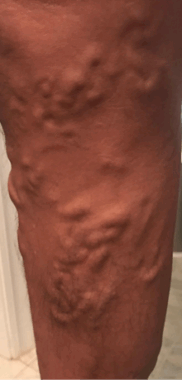
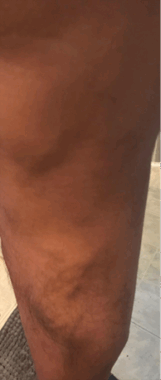
Before treatment. 2 days post EVLT treatment